
After taking the GMAT and receiving the score report, should I send my scores to schools? How many days until I can retake it?
Sending your scores (even if they’re bad) to schools is harmless in any situation.
不確定自己現在幾分?
12 題免費測出分數區間 →
That’s because you don’t understand the GMAT score reporting mechanism and the schools’ review process. The scores you send are stored in a database, and schools won’t look at them first.Schools look at the self-reported (highest) score you fill in your application form. Only when they decide to admit you will schools compare this score with the one in the system database; if it doesn’t match, they’ll drop you. So, past low scores don’t affect any decisions during the application process.
I even made a video specifically to explain this to you.
It’s harmless, but is there a positive reason to send your scores?
For example, here’s the latest update: a student who recently scored 695 under Dustin’s guidance had the following rankings among scores received by the five schools they applied to: UT Austin 96th / Duke Fuqua 95th / INSEAD 95th / Michigan Ross 93rd / Booth 88th.This ranking allows you to have an initial discussion with your consultant to make a more accurate strategic assessment.

If you’re below the 80th percentile, it’s recommended to continue studying and retake the test. If you’re above the 80th percentile, it’s advisable to have an in-depth discussion with your consultant.
If I choose to retake the test, when is the next exam?
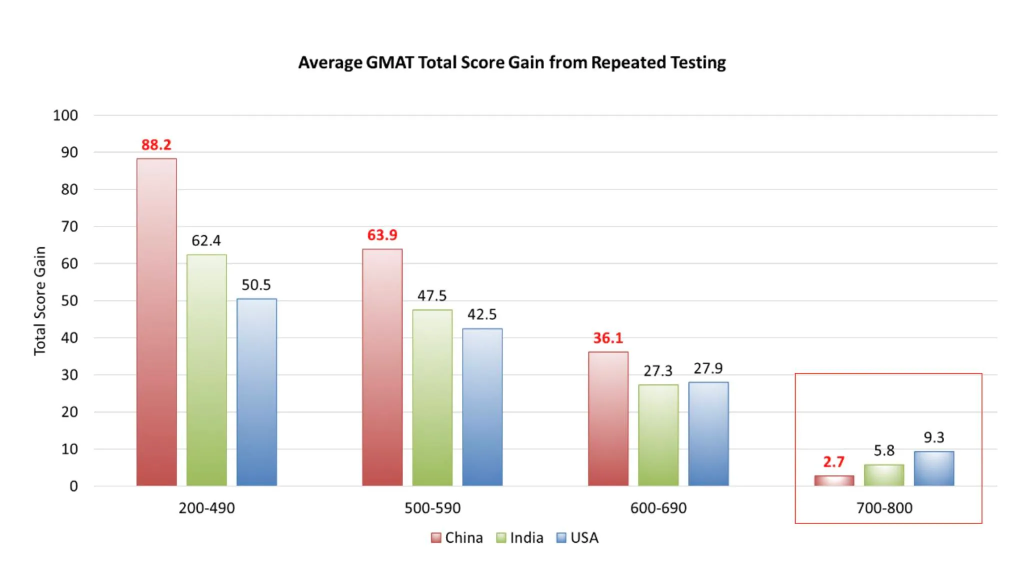
(Note: This data is from the old GMAT format. The score ranges, converted to the new format, are 205-485, 485-555, 565-645, 655-805. Additionally, due to differences in test sections, the average score improvement might change in the new format. However, as official data has not yet been released, this is the closest publicly available data.)
If you’re within the average score improvement range, I recommend keeping your study period to 16-30 days. If you’re aiming for an improvement above the average range, I suggest extending your study period to 30-45 days. Here, I’m also sharing with you the ‘GMAT Core Study Strategy’ chart, developed from coaching thousands of students.

